Home/Technical Information/Technical Notes
Technical Information
Technical Notes
Explains the reasoning behind choosing an analysis method and deciding the settings, from a technical standpoint.

Home/Technical Information/Technical Notes
Technical Information
Explains the reasoning behind choosing an analysis method and deciding the settings, from a technical standpoint.
All articles
Covers technical topics where a judgment is needed in design and analysis, such as choosing an analysis method, setting boundary conditions, and computational resource requirements.
 https://lightbridge.co.jp/wp-content/uploads/2023/09/Lumerical-FDTD_GPU_featured-e1695307140874.webp
133
147
Redouane Katouf
https://lightbridge.co.jp/wp-content/uploads/2026/01/logo_LightBridge-300x88-1.webp
Redouane Katouf2023-09-21 23:51:422026-09-05 15:47:25Lumerical FDTD GPU Solver: Requirements and Current Limitations
https://lightbridge.co.jp/wp-content/uploads/2023/09/Lumerical-FDTD_GPU_featured-e1695307140874.webp
133
147
Redouane Katouf
https://lightbridge.co.jp/wp-content/uploads/2026/01/logo_LightBridge-300x88-1.webp
Redouane Katouf2023-09-21 23:51:422026-09-05 15:47:25Lumerical FDTD GPU Solver: Requirements and Current Limitations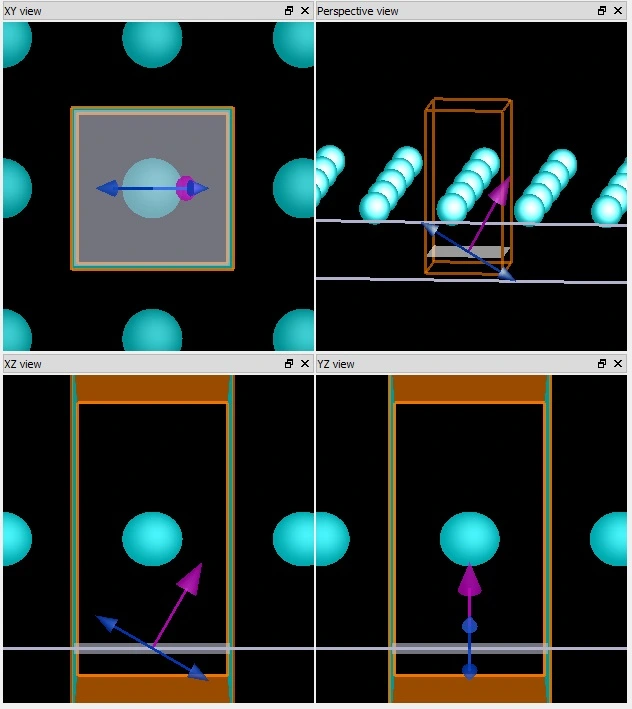 https://lightbridge.co.jp/wp-content/uploads/2022/09/usr_bloch_angle_screenshot.webp
709
632
Redouane Katouf
https://lightbridge.co.jp/wp-content/uploads/2026/01/logo_LightBridge-300x88-1.webp
Redouane Katouf2022-09-06 13:33:432026-09-05 05:01:22Bloch Boundary Conditions in Lumerical FDTD and MODE: Principle, Settings and Computational Cost
https://lightbridge.co.jp/wp-content/uploads/2022/09/usr_bloch_angle_screenshot.webp
709
632
Redouane Katouf
https://lightbridge.co.jp/wp-content/uploads/2026/01/logo_LightBridge-300x88-1.webp
Redouane Katouf2022-09-06 13:33:432026-09-05 05:01:22Bloch Boundary Conditions in Lumerical FDTD and MODE: Principle, Settings and Computational Cost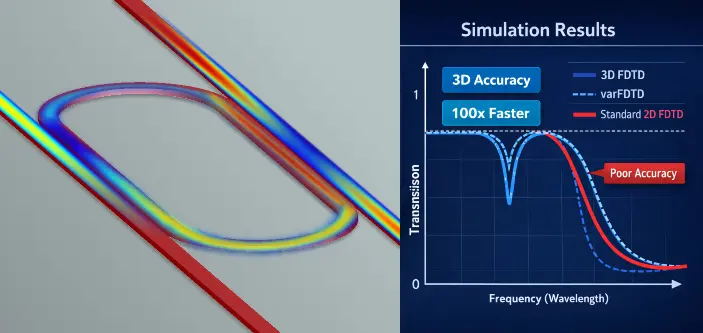 https://lightbridge.co.jp/wp-content/uploads/2022/02/フォトニクスシミュレーションの比較.webp
333
703
Redouane Katouf
https://lightbridge.co.jp/wp-content/uploads/2026/01/logo_LightBridge-300x88-1.webp
Redouane Katouf2022-02-12 11:43:022026-09-05 15:47:25Why varFDTD Suits Large PIC Design: Accuracy and Speed Against BPM and EME
https://lightbridge.co.jp/wp-content/uploads/2022/02/フォトニクスシミュレーションの比較.webp
333
703
Redouane Katouf
https://lightbridge.co.jp/wp-content/uploads/2026/01/logo_LightBridge-300x88-1.webp
Redouane Katouf2022-02-12 11:43:022026-09-05 15:47:25Why varFDTD Suits Large PIC Design: Accuracy and Speed Against BPM and EMEFrom confirming that the settings in an article are appropriate, through to discussing how they apply to your particular problem.