Home/Products/Ansys Zemax/Zemax OpticStudio

ANSYS ZEMAX

Zemax OpticStudio

Ansys Zemax OpticStudio is optical simulation software for optical design, lens design and stray light analysis. Sequential and non-sequential ray tracing, physical optics propagation (POP), tolerance analysis and MTF/PSF evaluation are all handled in a single environment.
SequentialNon-sequentialPOPTolerancing

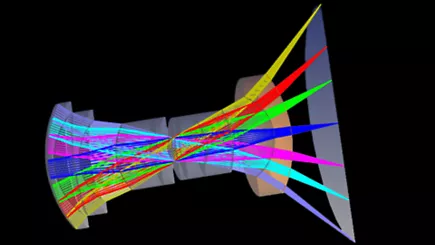
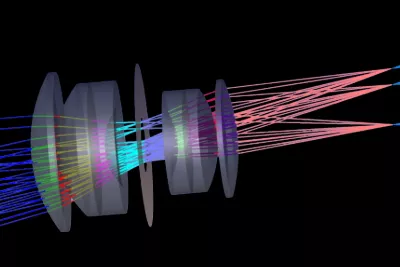
Layout and ray trace of a lens system in Zemax OpticStudio

Overview

What OpticStudio is

Built on sequential and non-sequential ray tracing, it provides a single continuous optical simulation workflow — from imaging optics, illumination design and laser optics through to tolerance analysis and performance evaluation.

LightBridge proposes a license configuration matched to your application and design challenges, provides technical demonstrations and documentation, and then supports you after adoption with Japanese-language technical support, help getting the most from the software, and setting it up around your actual design practice.

Ansys Lumerical can be linked in as well, extending this to integrated optical design that includes nanophotonics.

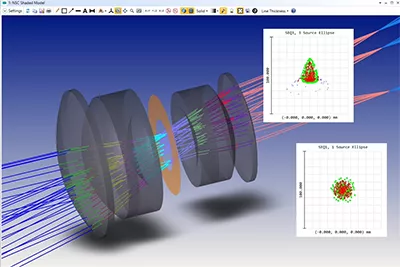
An analysis view in the non-sequential mode of Zemax OpticStudio

Analysis modes

Sequential and non-sequential

Two ray tracing modes in one environment, chosen according to what you are designing.

Modelling that combines sequential and non-sequential

01

Ray tracing analysis (sequential) | Imaging optical design

A fast, accurate sequential ray tracing engine for designing imaging systems such as camera lenses, microscopes and telescopes. Aberration analysis and MTF evaluation let you assess and optimise image quality quantitatively.

02

Non-sequential ray tracing | Illumination design and stray light analysis

Non-sequential ray tracing covers illumination design for LED lighting, light guide plates and light guides, along with stray light and ghost analysis. It quantifies illuminance distribution and the effect of scattered light.

Design features

The main features used in optical design

Aberration analysis and MTF/PSF evaluation

Automatic optimisation of lens designs

Spot diagrams and wavefront aberration

Illuminance distribution and light distribution analysis

Scattering modelling

Interference and coherence analysis

Analysis features

Analyses that evaluate an optical design

See also the related analysis technologies.

01

Physical optics (POP)

Physical Optics Propagation (POP) analyses diffraction effects and Gaussian beam propagation accurately, covering designs where wave optics has to be taken into account, such as laser optics and interferometric measurement systems.

02

Optimisation of optical designs

A range of algorithms — global optimisation, multi-configuration optimisation and others — searches efficiently for the solution that meets your design requirements, allowing an optical design to be optimised against several operating conditions at once.

03

Tolerance analysis

Sensitivity analysis and Monte Carlo analysis quantify the effect of manufacturing variation and predict yield in volume production, so that the optical design can be cost-optimised on the basis of the tolerance analysis.

04

Image simulation

Simulates the image quality of an optical system using a real image, so that MTF (modulation transfer function), PSF (point spread function), distortion and the like can be seen directly and the design judged intuitively.

05

Stray light analysis

Non-sequential ray tracing quantifies the effect of scattered light and ghosts.

Applications

Where Zemax OpticStudio is applied

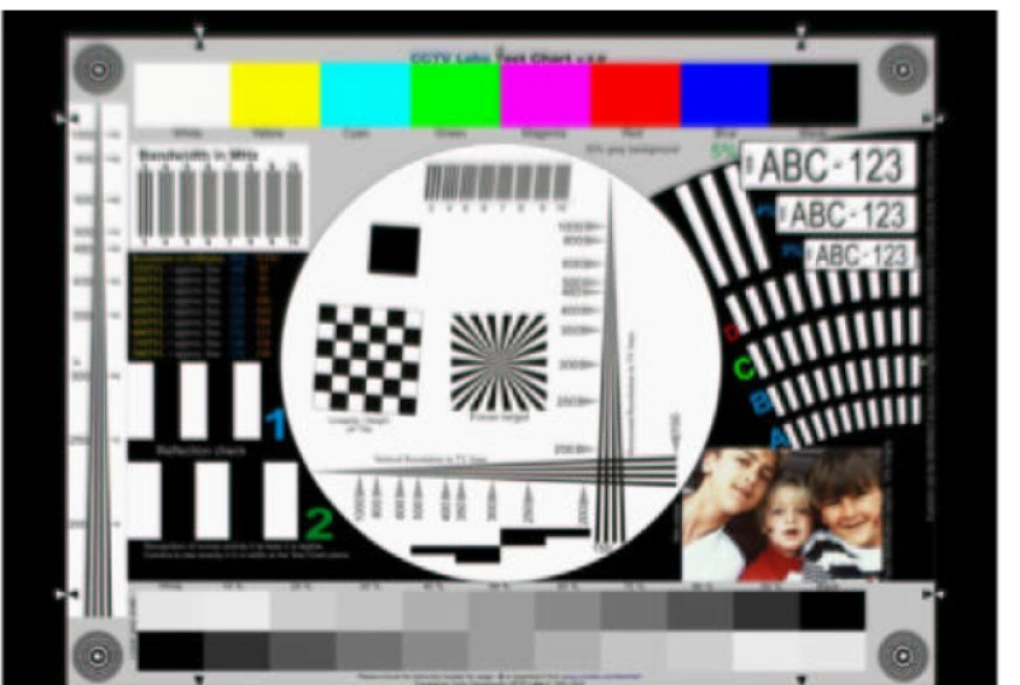
An imaging simulation result from OpticStudio, showing a resolution test chart imaged through the designed lens system

Camera lenses and imaging optical design

  • Aberration correction and optimisation for smartphone and automotive camera lenses
  • Imaging performance evaluation for industrial and inspection cameras
  • Lens design for medical endoscopes and microscopes
  • Design and tolerance verification of space and aerospace optical systems

Image quality analysis

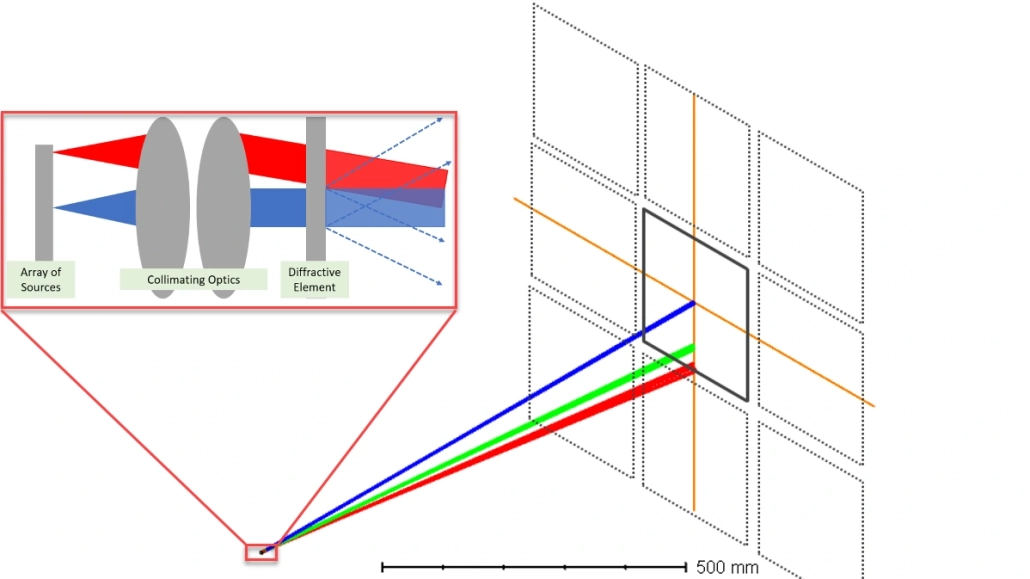
Optical layout of a flash LiDAR transmitter, showing the source array, the collimating optics and the diffractive element, together with the projected rays

LiDAR and sensing optical design

  • Design and stray light evaluation of LiDAR transmit and receive optics
  • Optical design and signal quality evaluation for ToF sensors
  • Optical optimisation of 3D sensing modules
  • Illumination and light distribution design for structured light projection

LiDAR

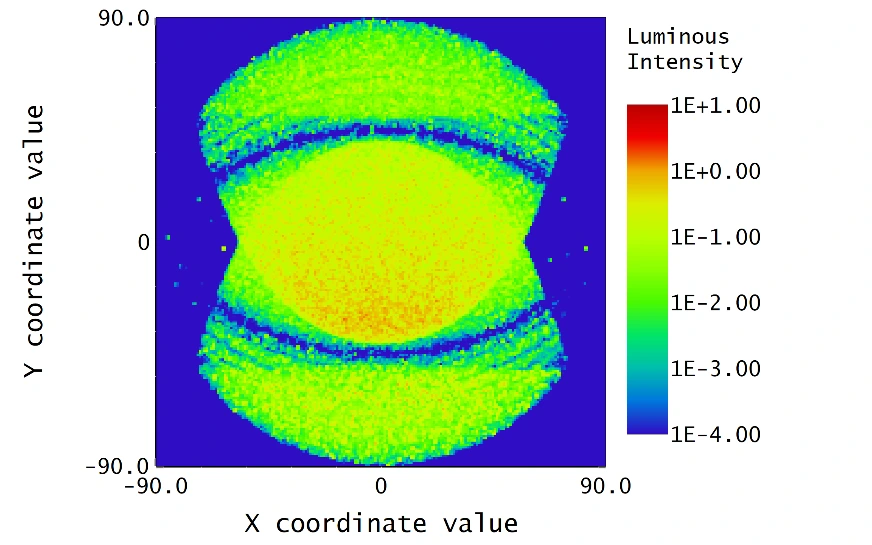
Luminous intensity distribution shown on an OpticStudio detector, over ±90 degrees horizontally and vertically, on a colour scale

Illumination design, automotive lighting and displays

  • Light distribution design and illuminance evaluation for LED lighting
  • Illumination design for automotive headlamps and tail lamps
  • Design of projection optics
  • Illumination simulation of backlights and light guide plates

Illumination and lighting

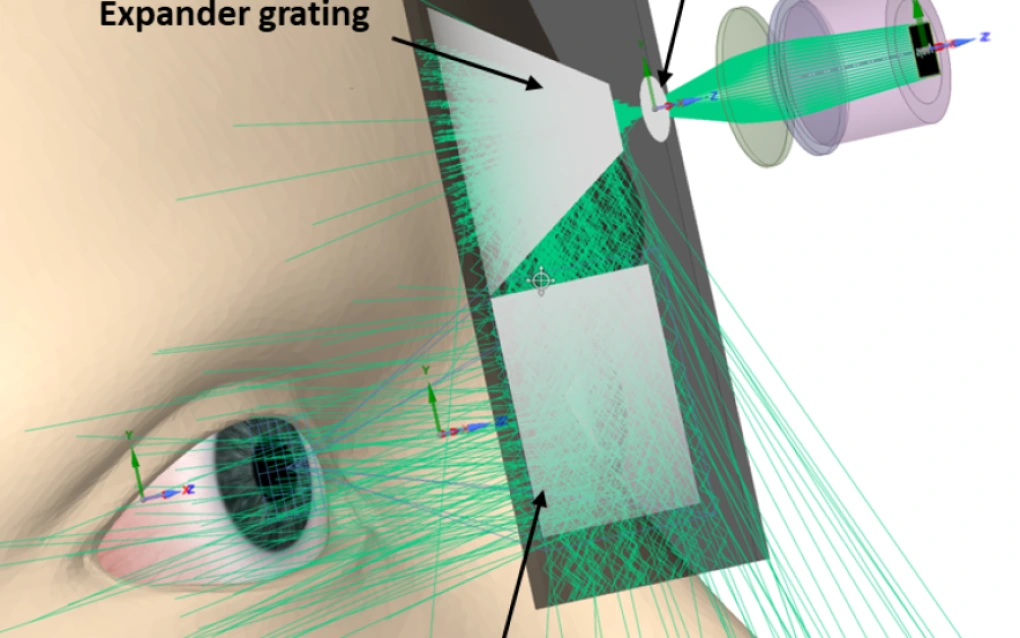
Optical system of an AR waveguide combiner, tracing light from the projector into the waveguide, through the expander grating and on to the eye

AR/VR and wearable optical design

  • Display optics design for AR/VR headsets
  • Optical simulation of waveguide displays
  • Design and evaluation of eye tracking optics
  • Lens and optical design for smart glasses

AR/VR

Interoperability

Working with related products, and the design workflow

Zemax OpticStudio can be built into design workflows alongside Ansys Lumerical, Ansys Speos and others. We will propose an arrangement to suit your purpose, from optical design through to structural and thermal coupling.

01

Working with Lumerical

An integrated workflow with wave optics and nanophotonics

02

Working with Ansys Speos

Linking to automotive lighting and human vision simulation

03

Working with Mechanical

A structural–optical coupled analysis workflow

04

Working with Fluent

A thermal–optical coupled analysis workflow

05

Photonica Metalens

Metalens phase design and large-scale layout connect through to optical system evaluation in Zemax OpticStudio.

We will advise on the best license configuration for your application and for the analyses you need — lens design, stray light analysis, tolerance analysis and so on.

Ansys Optics system requirements

For supported releases and operating environments, please see the latest system requirements.

Frequently asked questions

Questions we are often asked about Zemax OpticStudio

The questions we are most often asked before adoption.

Yes. We will propose a license configuration to match the analyses you need — lens design, stray light analysis, tolerance analysis — and the way your design work flows. Where it helps, we run a technical demonstration so you can confirm the configuration against a real design problem.

Mainly the non-sequential mode. Besides stray light and ghost analysis, it also serves illumination design for LED lighting, light guide plates and light guides, and the evaluation of illuminance distribution and scattered light.

Yes. Combining Zemax OpticStudio with Ansys Lumerical lets you build a workflow that connects the analysis of nano- and micro-optical elements to the design and evaluation of lenses and optical systems. Exactly how the two are linked depends on what is being analysed and on how your design work flows.

Yes. Alongside technical support, LightBridge helps with setup at the point of adoption, advice on analysis methods, and getting the software running in a way that fits your actual design work.

Technical support

LightBridge proposes a license configuration matched to your application and design challenges, provides technical demonstrations and documentation, and then supports you after adoption with Japanese-language technical support, help getting the most from the software, and setting it up around your actual design practice.

Technical demo

A technical demonstration turns an approach to your design problem into something concrete.

Technical demo: 30–60 minutes | online | run by a dedicated engineer

Considering optical simulation software?

If you are comparing optical simulation software or thinking about adopting it, we can advise on a configuration to suit your application.