Improving Optical Coupling Efficiency in Photonic Integrated Circuits: Co-Designing a Microlens and Grating Coupler
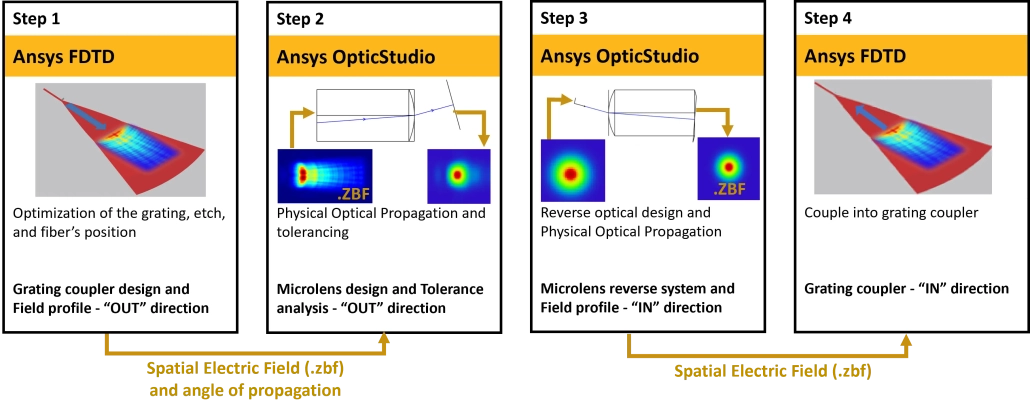
How to raise fibre-to-waveguide coupling efficiency by co-designing a grating coupler and a microlens. Fields solved in Lumerical FDTD are passed to Zemax OpticStudio as ZBF, where POP is used to evaluate lens curvature and placement in a multi-scale analysis.
Published
The key to efficient optical coupling between an optical fibre and a waveguide in a photonic integrated circuit (PIC) is co-designing the grating coupler and the microlens. This approach raises coupling efficiency dramatically and also improves tolerance to mode mismatch and to small misalignments. This article presents a design workflow built on multi-scale simulation using Ansys Lumerical and Zemax OpticStudio.
Optimisation strategy for the grating coupler and microlens
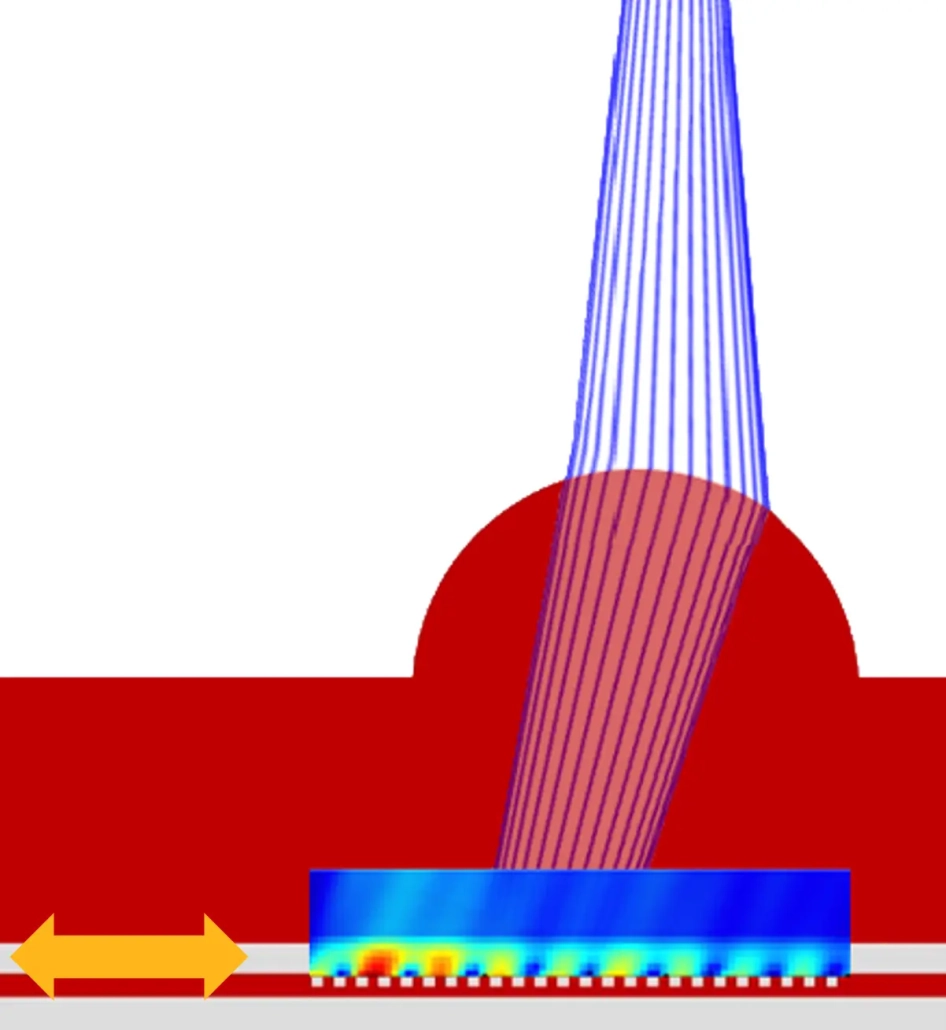
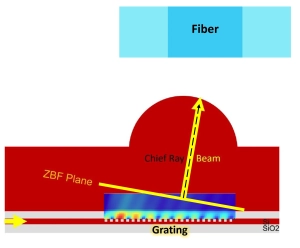
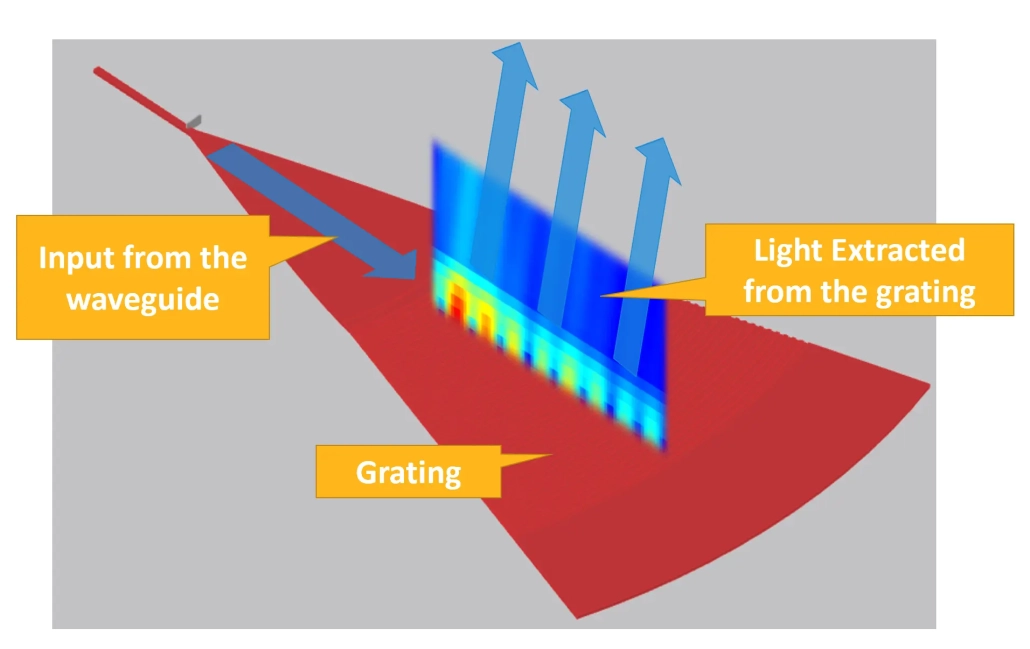
In optimal photonic device design, the combination of a grating coupler and a microlens is essential for spreading and collimating light effectively. In particular, when analysing how light behaves in structures larger than the wavelength scale, Physical Optics Propagation (POP) is applied.Lumerical FDTD The solver is used to analyse the electromagnetic field emitted by the grating coupler, and that data is exported in ZBF format. Importing it into Zemax OpticStudio makes it possible to analyse macro-scale propagation behaviour in detail.
Raising coupling efficiency and reducing mode mismatch
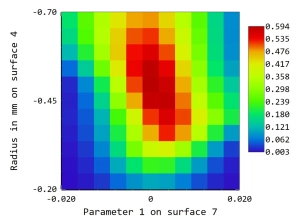
Optimising the coupling efficiency between fibre and waveguide requires precise adjustment of the curvature and position of the microlens. For example, with 300 um between the optical fibre and the waveguide, simulation shows that a lens radius of curvature of 500 um gives the highest coupling efficiency. The results also show that adding a microlens is an effective way to improve tolerance to mismatch, which raises overall system performance.
System-level loss and efficiency analysis
Total system loss is analysed in detail by combining the Lumerical and Zemax results. Output coupling loss, for instance, is shown to be around 40%, and adding the microlens improves coupling efficiency dramatically. Input-direction coupling efficiency is analysed in the same way, which makes it possible to arrive at an optimal design that maximises overall system efficiency. Coupling design driven by multi-scale simulation in this way is the key to a step change in photonic integrated circuit performance.
We may request cookies to be set on your device. We use cookies to let us know when you visit our websites, how you interact with us, to enrich your user experience, and to customize your relationship with our website.
Click on the different category headings to find out more. You can also change some of your preferences. Note that blocking some types of cookies may impact your experience on our websites and the services we are able to offer.
Essential Website Cookies
These cookies are strictly necessary to provide you with services available through our website and to use some of its features.
Because these cookies are strictly necessary to deliver the website, refusing them will have impact how our site functions. You always can block or delete cookies by changing your browser settings and force blocking all cookies on this website. But this will always prompt you to accept/refuse cookies when revisiting our site.
We fully respect if you want to refuse cookies but to avoid asking you again and again kindly allow us to store a cookie for that. You are free to opt out any time or opt in for other cookies to get a better experience. If you refuse cookies we will remove all set cookies in our domain.
We provide you with a list of stored cookies on your computer in our domain so you can check what we stored. Due to security reasons we are not able to show or modify cookies from other domains. You can check these in your browser security settings.
Google Analytics Cookies
These cookies collect information that is used either in aggregate form to help us understand how our website is being used or how effective our marketing campaigns are, or to help us customize our website and application for you in order to enhance your experience.
If you do not want that we track your visit to our site you can disable tracking in your browser here:
Other external services
We also use different external services like Google Webfonts, Google Maps, and external Video providers. Since these providers may collect personal data like your IP address we allow you to block them here. Please be aware that this might heavily reduce the functionality and appearance of our site. Changes will take effect once you reload the page.
Google Webfont Settings:
Google Map Settings:
Google reCaptcha Settings:
Vimeo and Youtube video embeds:
Other cookies
The following cookies are also needed - You can choose if you want to allow them:
Privacy Policy
You can read about our cookies and privacy settings in detail on our Privacy Policy Page.